Applications
Entrances, larger event and gathering areas, parks and plazas, and showroom or commercial frontages all use dome structures for a distinctive, approachable roofline.
Dome Structures
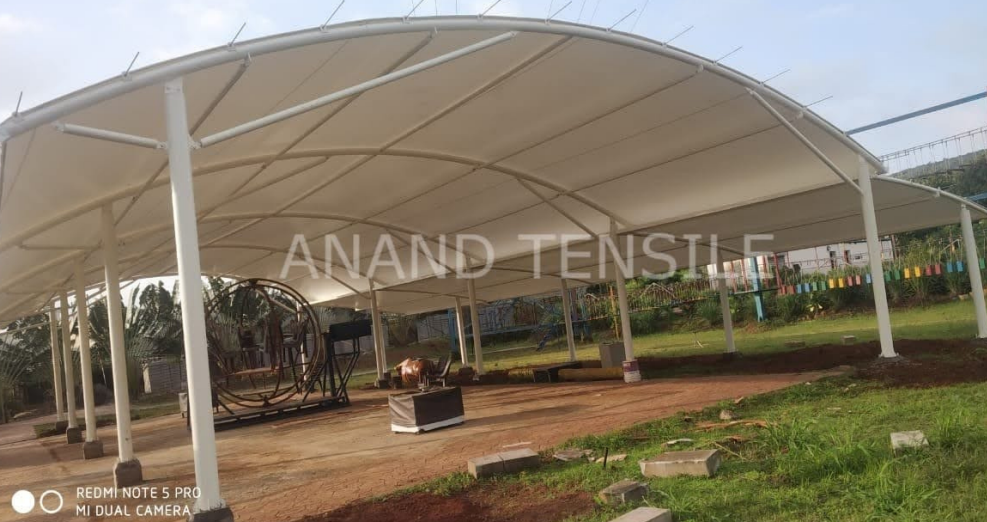
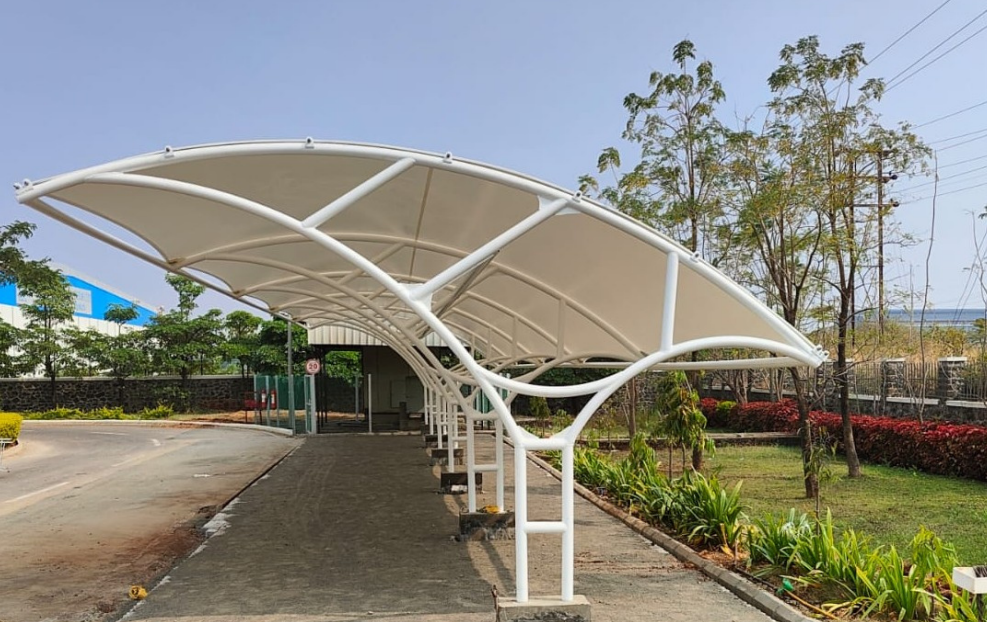
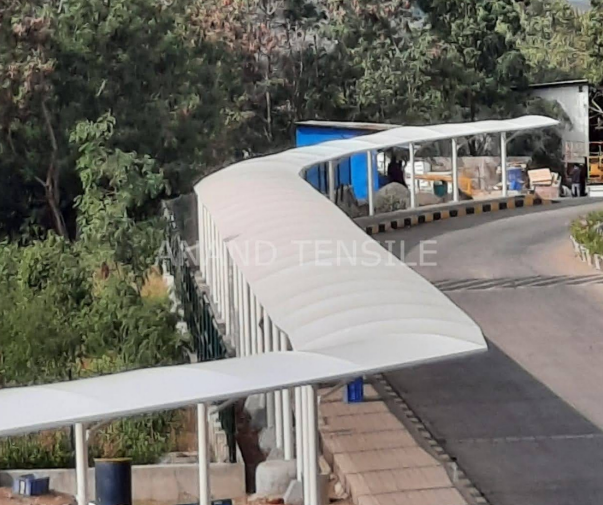
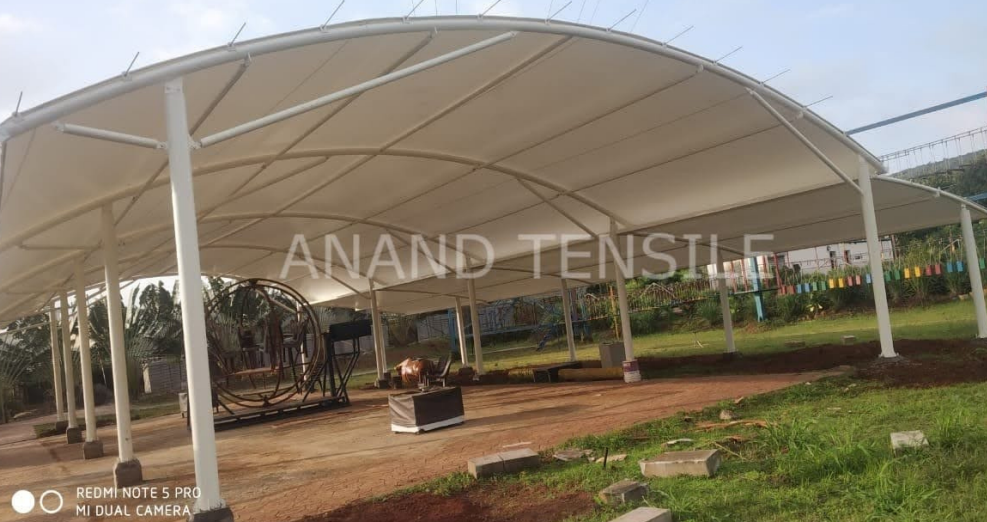
A tensile dome uses a smoothly curved, rounded profile rather than the pointed high point of a conical structure. The membrane is tensioned across a curved frame to hold this continuous rounded shape — a common choice for building entrances where a softer, more welcoming architectural form is wanted.
Shields people and vehicles from sun, rain and harsh weather.
Cover more area with minimal columns.
Tailor-made designs to match your space.
Fast and efficient installation with minimum disruption.
High-quality materials for long-term performance.
Smart Tensile Solutions
We design and install tensile structures that make open areas more useful, organised and visually appealing. Every structure is engineered for local weather conditions while adding value to your property.
High-quality membrane fabric that blocks harmful UV rays.
Engineered to handle high winds and heavy loads.
Waterproof membrane with planned drainage for complete protection.
Entrances, larger event and gathering areas, parks and plazas, and showroom or commercial frontages all use dome structures for a distinctive, approachable roofline.
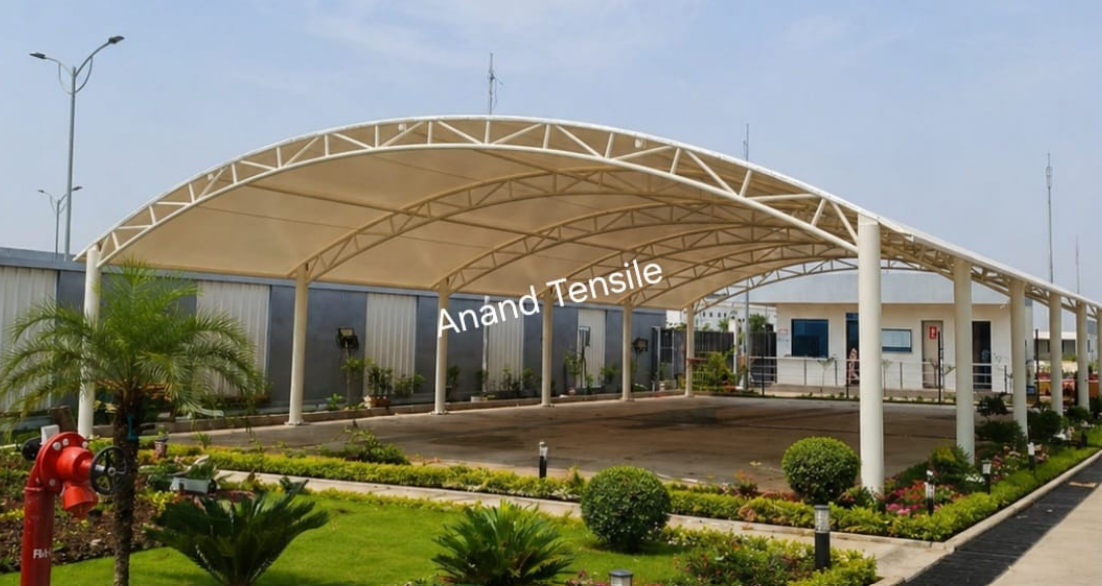
Because the frame itself is curved, dome structures require more specific fabrication planning than flatter forms — this is worked out during the design stage for your project, using mild-steel or structural steel depending on span.
Protects people, vehicles and property from sun, rain and hail.
Maximises usable space with clear, open spans.
Enhances the look and value of your property.
Natural daylight with less heat under the canopy.
Cost-effective with low maintenance requirements.
Strong, durable and built for long-term use.
We understand your requirements and site conditions.
We create custom designs that fit your space and purpose.
High-quality materials and precision fabrication at our facility.
Expert installation with safety, efficiency and minimal downtime.
Ongoing support and maintenance whenever required.
A dome has a continuous rounded curve; a cone has a distinct pointed high point. Both are tensile forms but read differently.
Yes — dome size scales to the application, from a small entrance feature to a larger event-space roof.
Curved-frame fabrication is more involved than flat forms, which can affect cost — confirmed through a specific quotation.
Book Your Free Site Inspection Today!
Get expert guidance and the right solution for your space.